
Somnath Temple
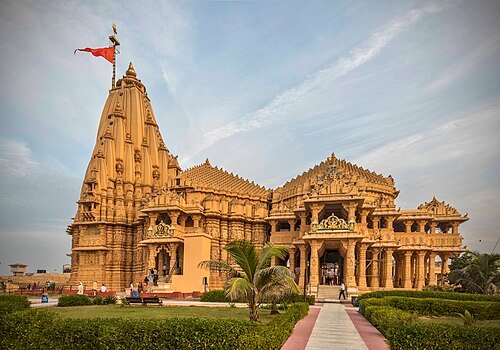
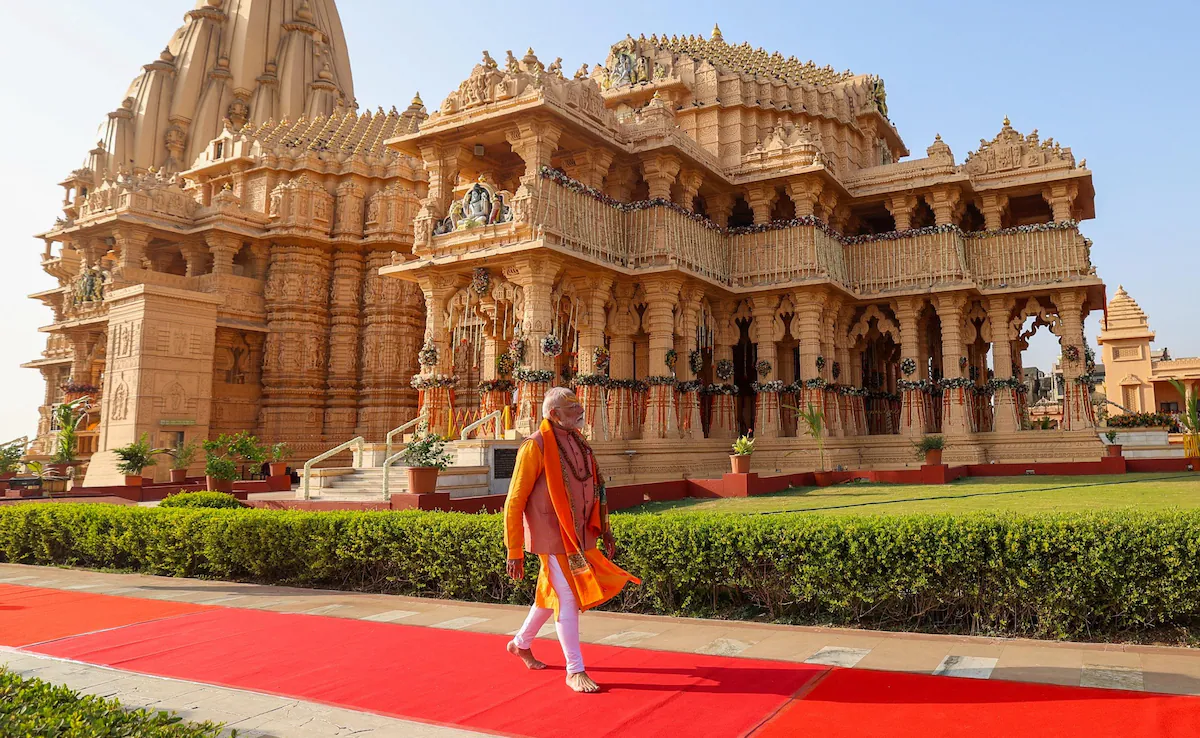
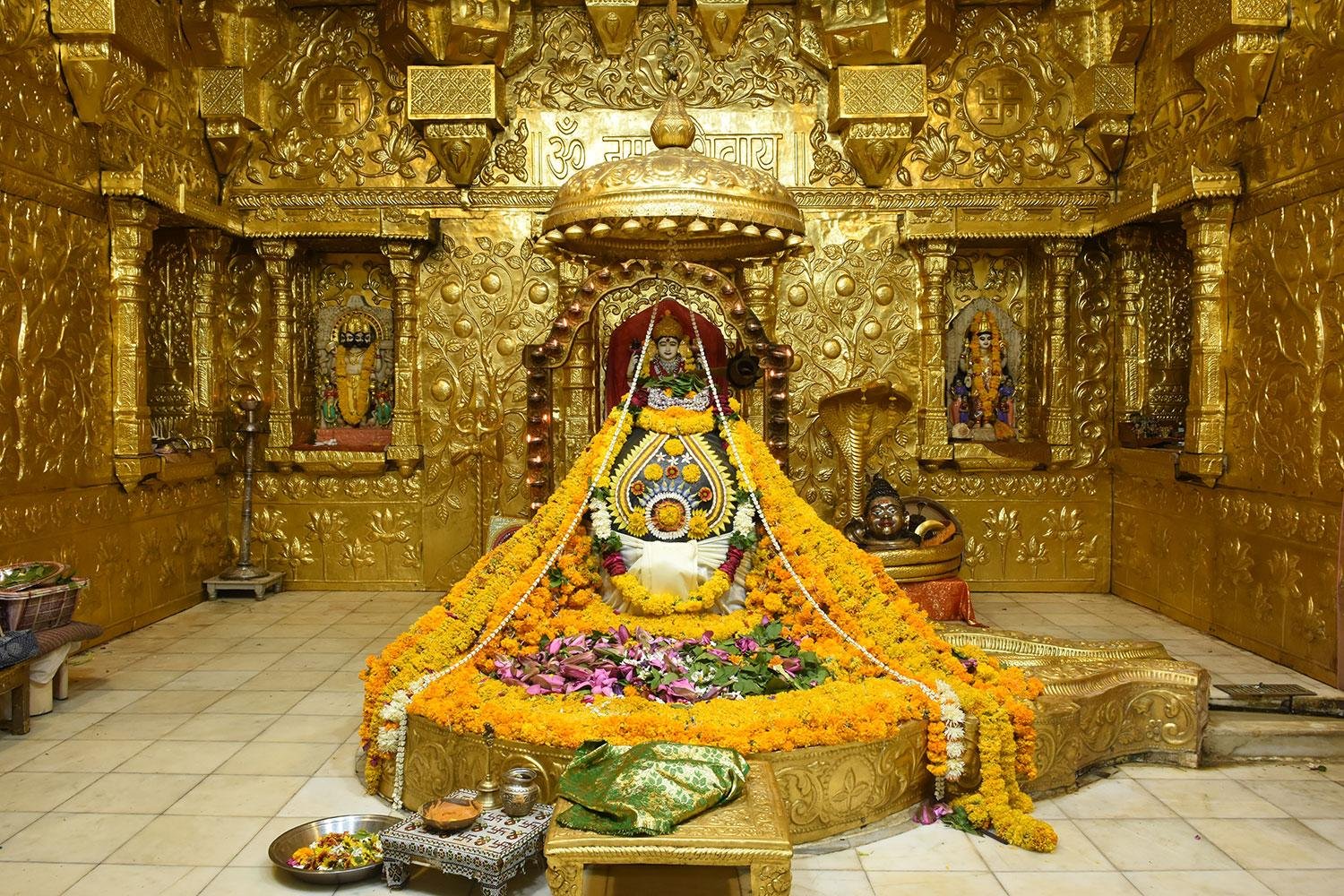
Somnath Temple, located on the western coast of Gujarat in Prabhas Patan near Veraval, is one of the twelve sacred Jyotirlingas of Lord Shiva. It holds a unique place in Indian mythology and history, symbolizing both the glory of faith and the resilience of reconstruction. The name ‘Somnath’ translates to “The Lord of the Moon,” and the temple has been a beacon of devotion, attracting millions of pilgrims and tourists over centuries.
Historical Background
The Somnath Temple boasts a storied past that dates back thousands of years. According to legend, the original temple was built by the Moon God (Chandra) in gold, later reconstructed in silver by Ravana, in wood by Lord Krishna, and then in stone by the Solanki king Bhimdev in the 11th century. Throughout history, the temple has been destroyed and rebuilt several times due to repeated invasions by foreign rulers, including Mahmud of Ghazni in the 11th century.
The present-day structure was reconstructed in 1951 under the guidance of Sardar Vallabhbhai Patel and Dr. Rajendra Prasad, the first President of India, symbolizing the resurgence of India’s cultural and spiritual pride.
Religious Significance
Somnath is revered as the first among the twelve Jyotirlingas, making it the most sacred of all. It is believed that Lord Shiva manifested here as a fiery column of light (Jyoti), representing his infinite power and presence. The temple is also associated with the penance of the Moon God, who was cursed by his father-in-law Daksha and was relieved of his affliction by worshipping Lord Shiva at this sacred spot.
Devotees believe that worshipping at Somnath brings peace, health, and prosperity, and that the Jyotirlinga here has self-manifested energy that draws devotees into deep spiritual contemplation.
Architectural Marvel
The temple is an architectural wonder built in the Chalukya style, showcasing intricate carvings, majestic pillars, and a sanctum that houses the revered Shiva Linga. The current temple is built with pink sandstone and faces east, symbolizing new beginnings and divine illumination.
One of the temple’s most fascinating features is the “Arrow Pillar” (Baan Stambh), which indicates that there is no land in a straight line between Somnath and the South Pole – a symbolic representation of the temple’s centrality in the spiritual geography of the world.
Festivals and Celebrations
The Somnath Temple becomes a center of grand celebrations during Mahashivratri, when thousands of devotees flock to offer special prayers. Other significant occasions include Shravan Maas, Kartik Purnima, and various regional festivals, which are observed with great spiritual fervor and traditional rituals.
Connect With Us
The Somnath Temple is not just a place of worship but a spiritual journey that connects the divine with the mortal. Its grandeur and sanctity echo the eternal presence of Lord Shiva and offer a serene experience to every seeker.
Whether you’re a pilgrim seeking blessings or a traveler exploring India’s spiritual heritage, a visit to Somnath is truly a transformative experience. Come, immerse yourself in the vibrations of divinity, timeless history, and architectural brilliance.
Seeking Blessings at Somnath Temple?
Experience the divine power of the god worshipped in her unique palanquin form in Gujarat.